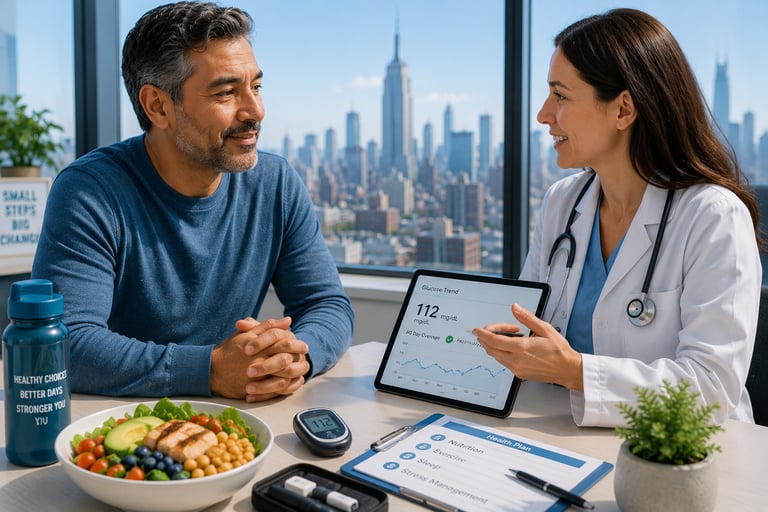
Can Diabetes Be Reversed? NYC Guide to Type 2 Diabetes Remission & Blood Sugar Control
Can diabetes be reversed? Learn the difference between remission and cure, how Type 2 diabetes may be reversed through lifestyle changes, and what NYC residents need to know about long-term blood sugar control.
5/27/20264 min read
Diabetes Can Be Reversed? What NYC Residents Need to Know About Remission and Long-Term Blood Sugar Control
Many people living with diabetes ask the same hopeful question: Can diabetes be reversed?
The answer depends on the type of diabetes and how early intervention begins. While there is currently no cure for diabetes, many individuals with Type 2 diabetes can achieve remission through lifestyle changes, weight management, physical activity, and medical supervision.
For New York City residents balancing busy schedules, long commutes, stress, and irregular eating habits, understanding what diabetes remission really means can help you make informed decisions about your health.
What Does It Mean When People Say Diabetes Can Be Reversed?
The phrase "diabetes can be reversed" is commonly used when discussing Type 2 diabetes remission.
Remission means blood sugar levels return to a normal or near-normal range without the need for diabetes medication for an extended period.
However, remission is not the same as a cure.
Remission vs. Cure
Remission
Blood sugar remains within healthy ranges
Medication may no longer be required
Healthy habits must continue
Cure
Disease is permanently eliminated
No ongoing management required
Currently, medical experts consider Type 2 diabetes remission possible, but a permanent cure is not available.
Can Type 1 Diabetes Be Reversed?
Understanding Type 1 Diabetes
Type 1 diabetes is an autoimmune condition.
The immune system mistakenly attacks insulin-producing beta cells in the pancreas.
As a result:
Insulin production stops
Blood sugar rises
Lifelong insulin therapy becomes necessary
Because the pancreatic cells are destroyed, Type 1 diabetes cannot currently be reversed.
Researchers continue studying potential future treatments, but at this time there is no proven method to reverse Type 1 diabetes.
Can Type 2 Diabetes Be Reversed?
The Good News About Type 2 Diabetes
Type 2 diabetes develops differently.
Instead of completely losing insulin production, the body becomes resistant to insulin's effects.
This means glucose remains in the bloodstream rather than entering cells efficiently.
For many individuals, improving insulin sensitivity can dramatically improve blood sugar control.
In some cases, diabetes remission becomes possible.
Factors That Influence Remission
Several factors can improve the chances of remission:
Early diagnosis
Weight loss
Increased physical activity
Improved nutrition
Consistent glucose monitoring
Medical supervision
The earlier intervention begins, the better the long-term outlook often becomes.
How Weight Loss Can Improve Diabetes
Why Excess Weight Matters
Excess body fat—particularly around the abdomen—can increase insulin resistance.
When weight is reduced:
Insulin sensitivity improves
Blood sugar levels decrease
Pancreatic function may improve
Inflammation decreases
Research has shown that even modest weight loss can significantly improve diabetes management.
For some individuals, larger weight reductions may lead to remission.
The Role of Exercise in Diabetes Reversal
Benefits of Exercise
Regular exercise helps:
Lower blood sugar
Improve insulin sensitivity
Support weight loss
Improve cardiovascular health
Reduce stress
Recommended Activities
Many healthcare providers recommend:
Walking
Cycling
Swimming
Resistance training
Low-impact fitness classes
For NYC residents, simple habits like walking to work, taking stairs, or walking after meals can make a meaningful difference.
Nutrition and Diabetes Remission
Food Choices Matter
Blood sugar control is heavily influenced by nutrition.
Many diabetes management plans emphasize:
Lean proteins
High-fiber vegetables
Whole grains
Healthy fats
Portion control
Foods Often Limited
Reducing consumption of:
Sugary beverages
Refined carbohydrates
Highly processed foods
Excess sweets
can help improve glucose control and support remission efforts.
Consistency matters more than perfection.
Why Blood Sugar Monitoring Is Essential
Why Monitoring Matters
People working toward diabetes remission often monitor glucose regularly.
Monitoring provides valuable information about:
Food responses
Exercise effectiveness
Medication needs
Blood sugar trends
Many individuals use:
Diabetic test strips
Glucose meters
Continuous glucose monitors (CGMs)
Regular monitoring allows patients and healthcare providers to make informed adjustments.
What Factors Increase the Risk of Type 2 Diabetes?
Common Risk Factors
Several risk factors contribute to diabetes development:
Family history
Obesity
Sedentary lifestyle
High blood pressure
Poor diet
Aging
Sleep deprivation
Chronic stress
Many NYC residents face additional challenges, including:
Long work hours
Limited exercise time
Frequent restaurant meals
High-pressure work environments
Understanding these risk factors can help guide prevention strategies.
Case Study Placeholder
A 47-year-old NYC resident was diagnosed with Type 2 diabetes after experiencing:
Fatigue
Frequent thirst
Weight gain
Elevated A1C levels
After discussing treatment options with his healthcare team, he implemented several lifestyle changes.
What Changed
He began:
Walking 30 minutes daily
Strength training twice weekly
Monitoring blood sugar regularly
Reducing sugary beverages
Improving meal planning
Results After 12 Months
Significant weight loss
Improved A1C
Reduced medication requirements
Better energy levels
Improved overall health
Key Takeaway
For many individuals, consistent lifestyle improvements can dramatically improve diabetes outcomes and may lead to remission.
Disclaimer
Individual results vary. Always consult qualified healthcare professionals regarding diagnosis and treatment.
Can Diabetes Return After Remission?
Yes, It Can
One of the most important facts about remission is that it requires ongoing maintenance.
Blood sugar may rise again if:
Weight is regained
Exercise decreases
Nutrition habits decline
Stress becomes unmanaged
This is why long-term lifestyle habits remain essential even after remission is achieved.
Lifestyle Habits That Support Long-Term Success
Daily Habits That Help
Walk regularly
Monitor blood sugar
Follow medical recommendations
Eat balanced meals
Prioritize sleep
Manage stress
Attend routine checkups
Small daily improvements often create substantial long-term benefits.
What NYC Residents Should Know About Managing Diabetes
Challenges
Busy schedules
High stress
Long commutes
Irregular meal timing
Advantages
Walkable neighborhoods
Access to healthcare specialists
Fitness facilities
Diabetes education programs
Simple daily habits such as walking after meals and tracking glucose consistently can significantly improve blood sugar control.
What to Do With Unused Diabetic Supplies
As diabetes improves or treatment plans change, many individuals find themselves with unused supplies.
Common examples include:
Test strips
CGMs
Lancets
Glucose meters
Insulin delivery supplies
Instead of allowing unopened supplies to expire, many NYC residents choose to sell eligible diabetic supplies.
Benefits of Selling Unused Supplies
Earn extra cash
Reduce waste
Help others access affordable diabetes products
Frequently Asked Questions About Whether Diabetes Can Be Reversed
Can diabetes be reversed permanently?
Currently, there is no permanent cure. However, many people with Type 2 diabetes can achieve long-term remission.
Can Type 1 diabetes be reversed?
No. Type 1 diabetes is an autoimmune condition and cannot currently be reversed.
How long does it take to reverse Type 2 diabetes?
It varies widely. Some people see major improvements within months, while others require longer-term lifestyle changes.
What is the fastest way to improve blood sugar?
A combination of healthy eating, weight management, exercise, glucose monitoring, and medical supervision is generally most effective.
Can exercise alone reverse diabetes?
Exercise is extremely helpful, but nutrition, weight management, and medical care also play important roles.
Can Diabetes Be Reversed?
The most accurate answer is that Type 2 diabetes can sometimes be placed into remission, while Type 1 diabetes cannot currently be reversed.
The key takeaway for NYC residents is that early intervention, consistent monitoring, healthy nutrition, physical activity, and medical guidance can dramatically improve blood sugar control and overall health.
The sooner you take action, the greater your opportunity to improve long-term outcomes.
Have Extra Diabetic Supplies?
If you have unopened:
Test strips
CGMs
Lancets
Diabetes monitoring supplies
you may be able to turn them into cash instead of letting them expire.
Why NYC Residents Choose Us
Fast quotes
Competitive payouts
Safe local process
Simple transactions
Ready to See What Your Supplies Are Worth?
Check what products we buy and learn how the process works today.
Get Started Today
Find out how much your eligible diabetic supplies may be worth and request a fast quote today.