Where Diabetes Occur in the Body: Organs, Symptoms & Health Risks Explained
Learn where diabetes occurs in the body and how it affects the pancreas, blood vessels, eyes, kidneys, nerves, and heart. Discover symptoms, risks, and diabetes management tips for NYC residents.
5/27/20264 min read
Where Diabetes Occur: Understanding How Diabetes Develops in the Body
Many NYC residents living with diabetes ask an important question: where diabetes occur in the body? While diabetes is commonly associated with blood sugar, the condition actually involves multiple organs and body systems working together—or failing to work properly.
Understanding where diabetes occurs can help patients better manage their condition, recognize warning signs early, and reduce the risk of long-term complications.
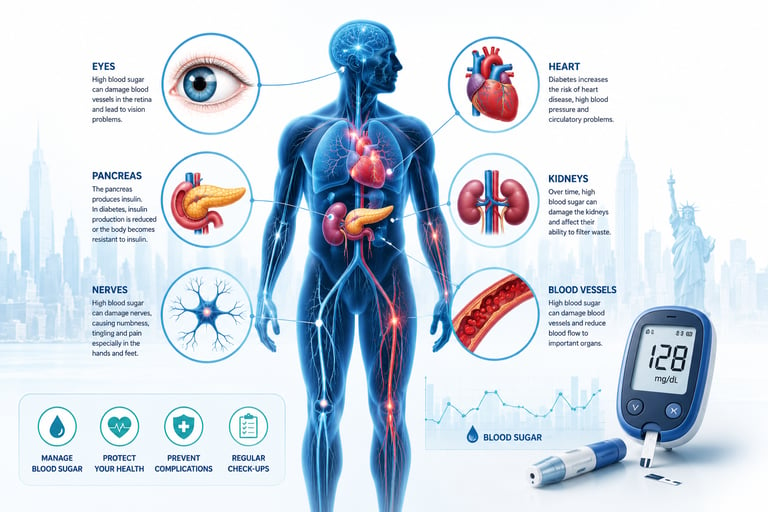
The truth is that diabetes doesn’t affect just one area of the body. It begins with problems involving insulin production or insulin resistance, but over time it can impact the pancreas, bloodstream, eyes, kidneys, nerves, heart, and more.
For people in New York City balancing fast-paced lifestyles, stress, irregular meals, and long work hours, understanding how diabetes develops is essential for long-term health.
Where Does Diabetes Occur in the Body?
Diabetes primarily begins in the:
Pancreas
Bloodstream
Cells that respond to insulin
The pancreas is the organ responsible for producing insulin, a hormone that helps move glucose (sugar) from the blood into the body’s cells for energy.
When this process breaks down, blood sugar levels rise.
The Role of the Pancreas in Diabetes
What Does the Pancreas Do?
The pancreas plays a critical role in blood sugar regulation.
It produces:
Insulin
Glucagon
Digestive enzymes
Insulin helps lower blood sugar by allowing glucose to enter cells.
Without enough insulin—or when the body stops responding properly to insulin—diabetes develops.
Where Type 1 Diabetes Occurs
Autoimmune Damage in the Pancreas
Type 1 diabetes occurs when the immune system attacks insulin-producing beta cells in the pancreas.
As more beta cells are destroyed:
Insulin production drops
Blood sugar rises
Glucose builds up in the bloodstream
People with Type 1 diabetes require insulin therapy because the pancreas can no longer produce enough insulin naturally.
Where Type 2 Diabetes Occurs
Insulin Resistance Throughout the Body
Type 2 diabetes develops differently.
Instead of completely stopping insulin production, the body becomes resistant to insulin’s effects.
This resistance mainly occurs in:
Muscle cells
Liver cells
Fat tissue
Over time:
The pancreas works harder
Insulin production becomes less effective
Blood sugar remains elevated
Eventually, the pancreas may become exhausted and insulin production declines further.
How Diabetes Spreads Beyond Blood Sugar
Although diabetes begins with insulin dysfunction, high blood sugar can damage many parts of the body.
Areas Commonly Affected by Diabetes
Eyes
Kidneys
Nerves
Heart
Blood vessels
Feet
Brain
This is why diabetes management requires more than simply lowering glucose numbers.
Where Diabetes Affects the Eyes
High blood sugar damages small blood vessels in the retina.
Common Eye Complications
Diabetic retinopathy
Blurry vision
Cataracts
Glaucoma
Early Warning Signs
Floaters
Difficulty seeing at night
Vision fluctuations
Dark spots
Routine eye exams are essential because early retinal damage may not cause noticeable symptoms.
Where Diabetes Affects the Kidneys
The kidneys filter waste from the bloodstream.
Over time, high blood sugar damages tiny kidney blood vessels, reducing filtration ability.
Possible Kidney Complications
Protein leakage in urine
Swelling
High blood pressure
Kidney disease
Kidney failure
Many people don’t notice kidney damage until it becomes advanced.
Where Diabetes Affects the Nerves
Diabetic Neuropathy
Diabetes commonly damages nerves throughout the body.
This often affects:
Feet
Legs
Hands
Symptoms May Include
Tingling
Burning pain
Numbness
Weakness
Poor circulation combined with nerve damage can increase infection risks.
Where Diabetes Affects the Heart and Blood Vessels
Diabetes significantly increases cardiovascular risk.
Why This Happens
High blood sugar damages blood vessel walls and promotes inflammation.
This increases the risk of:
Heart disease
Stroke
High blood pressure
Poor circulation
For NYC residents living under chronic stress, cardiovascular health becomes especially important.
Why Blood Sugar Monitoring Matters
Consistent glucose monitoring helps patients better understand how diabetes affects their bodies.
Many people rely on:
Diabetic test strips
Glucose meters
Continuous glucose monitors (CGMs)
Monitoring helps reduce:
Blood vessel damage
Vision complications
Nerve injury
Kidney strain
Common Causes and Risk Factors for Type 2 Diabetes
Several lifestyle and genetic factors contribute to diabetes development.
Risk Factors Include
Obesity
Sedentary lifestyle
Family history
Poor diet
High stress
Lack of sleep
Aging
NYC lifestyles can sometimes increase these risks due to:
Long commutes
Limited exercise time
Frequent restaurant meals
High stress environments
Can Diabetes Be Prevented or Reversed?
Pre - diabetes and Early Intervention
In many cases, Type 2 diabetes progression can be slowed—or even placed into remission—with early intervention.
Important strategies include:
Weight management
Exercise
Blood sugar monitoring
Nutrition improvements
Medical supervision
Type 1 Diabetes
Type 1 diabetes currently cannot be reversed because it involves autoimmune destruction of pancreatic cells.
Case Study Placeholder
A 48-year-old NYC resident working long hours in Manhattan began experiencing:
Fatigue
Increased thirst
Blurry vision
Tingling in the feet
After testing revealed elevated blood sugar levels, he was diagnosed with Type 2 diabetes.
What Changed
He began:
Daily glucose monitoring
Walking after meals
Meal planning
Reducing sugary beverages
Results After 9 Months
A1C improved significantly
Weight decreased
Energy improved
Neuropathy symptoms reduced
Key Takeaway
Early intervention and consistent monitoring can dramatically improve long-term outcomes.
Disclaimer
Individual results vary. Always consult qualified healthcare professionals.
Lifestyle Habits That Help Control Diabetes
Healthy daily habits can reduce complications throughout the body.
Helpful Strategies
Walking regularly
Eating balanced meals
Monitoring glucose consistently
Reducing processed sugars
Prioritizing sleep
Managing stress
Even moderate improvements can make a significant difference over time.
Diabetes Supplies Commonly Used for Monitoring
Managing diabetes often requires:
Test strips
Lancets
CGMs
Glucose meters
Insulin delivery systems
As treatment plans evolve, many people end up with unused diabetic supplies.
What NYC Residents Should Know About Diabetes Management
Living in New York City creates unique health challenges:
Fast-paced schedules
High stress
Long work hours
Irregular eating patterns
But NYC also offers major advantages:
Walkable neighborhoods
Access to specialists
Fitness centers
Advanced diabetes care
Simple habits like:
Walking after meals
Meal prepping
Monitoring glucose daily
can significantly improve diabetes management.
What to Do With Unused Diabetic Supplies
Many NYC residents eventually have extra:
Test strips
CGMs
Lancets
Monitoring supplies
Instead of throwing them away, many choose to sell unopened diabetic supplies.
Benefits of Selling Extra Supplies
Earn extra cash
Reduce waste
Help others access affordable diabetic supplies
Frequently Asked Questions About Where Diabetes Occur
Where does diabetes start in the body?
Diabetes primarily begins in the pancreas and insulin-regulating systems.
Does diabetes only affect blood sugar?
No. Diabetes can affect the eyes, kidneys, nerves, heart, and blood vessels.
Can diabetes damage organs?
Yes. Long-term uncontrolled blood sugar may damage multiple organs and body systems.
What organ is most responsible for diabetes?
The pancreas plays the primary role because it produces insulin.
Why does diabetes affect so many body parts?
High blood sugar damages blood vessels and nerves throughout the body.
Final Thoughts: Understanding Where Diabetes Occurs Helps You Protect Your Health
Understanding where diabetes occur in the body helps explain why consistent management is so important.
The key takeaway:
Diabetes affects far more than blood sugar alone—it can impact nearly every major system in the body over time.
For NYC residents living with diabetes, early intervention, glucose monitoring, healthy habits, and routine medical care can dramatically improve long-term health outcomes.
Have Extra Diabetic Supplies?
If you have unopened:
Test strips
CGMs
Lancets
Diabetes monitoring supplies
You may be able to turn them into cash instead of letting them expire.
Why NYC Residents Sell Their Supplies
Fast quotes
Competitive payouts
Safe local process
Simple transactions
Ready to See What Your Supplies Are Worth?
Check what products we buy and learn how the process works today.